La Société marseillaise de crédit




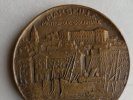












Les banques ont joué un rôle clé dans la création et le fonctionnement du système économique impérial. Elles ont soutenu les flux et les entreprises qui animaient ces échanges, participé au lancement d’emprunts, ouvert des succursales, orchestré la colonisation agricole et investi dans la réalisation d’infrastructures. La Société marseillaise de crédit a été l’un d’entre elles, même si les marchés coloniaux n’étaient pas ses seuls terrains d’action.
Contexte historique
Une banque régionale aux ambitions impériales
Fondée en 1865 avec un capital de 20 millions de francs sous l’égide de la Société générale de crédit industriel et commercial et de plusieurs grands noms de la place (Amédée Armand, Henry Bergasse, A. Baux & E. Fraissinet, Charles et Auguste Bazin, Marc Fraissinet & Cie, Jospeh, Alphonse et Jules Grandval, Imer frères & Leenhardt, Lazare, Edmond, Gustave, Léonce, Xavier et Édouard Luce, Albert, Alfred et Jules Rostand, Victor Roux, les frères Pastré, Hilarion Roux ou Zafiropulo & Zarifi), la SMC devient progressivement le bras armé financier des ambitions de la bourgeoisie d’affaires marseillaise. Son engagement dans le système économique impérial se manifeste tout d’abord par sa présence au capital de plusieurs entreprises marseillaises très impliquées dans ces échanges : Fournier & Cie, Établissements Verminck, CFAO, Grands travaux de Marseille, Saint-Louis, Raffineries de sucre de la Méditerranée. La SMC participe aussi aux négociations qui aboutissent à la création de la Banque d’Afrique occidentale (1901) et au lancement des premiers emprunts de l’AOF en 1903 et 1906 (165 millions de francs). L’Afrique du Nord est toutefois son champ d’action privilégié. Ses ambitions impériales s’y concrétisent une première fois en 1871, sous la présidence de Jean-Baptiste Pastré, lorsqu’elle obtient du gouvernement beylical de Tunis la gestion du service de sa dette. C’est un acte fort qui symbolise déjà la mise en dépendance de la Tunisie et l’avancée de la France dans le bras de fer qui l’oppose à l’Italie pour le contrôle d’une régence théoriquement toujours vassale de l’Empire ottoman. Les ambitions impériales de la SMC prennent une nouvelle dimension en 1878 avec l’accession à la présidence d’Amédée Armand. Le capital social est porté à 40 millions de francs, puis à 60 millions dès l’année suivante. Dans le même temps, un prêt de 2 millions est accordé à la ville d’Alger pour améliorer son service des eaux, puis un autre de 3,5 millions à la ville de Constantine et encore 500 000 francs à celle de Blidah.
Un espace de prédilection : la Tunisie
L’Algérie étant déjà largement contrôlée par le groupe Talabot à travers plusieurs entreprises importantes – Société générale algérienne ; Mines de fer de Mokta-el-Hadid ; Société générale de transport maritime à Vapeur –, c’est vers la Tunisie qu’Amédée Armand et les administrateurs de la SMC reportent leurs ambitions. Il s’agit de créer, sur le même modèle que la Société générale algérienne, une banque de crédit foncier disposant de vastes domaines agricoles ou forestiers pour favoriser la colonisation agricole. Cette banque aurait en outre le privilège d’être une banque d’Etat et de contrôler l’émission monétaire du pays. Le projet prend corps en plusieurs étapes :
- en mars 1879, la SMC fonde à Marseille la Société franco-tunisienne, un établissement bancaire qui accorde aussitôt un prêt d’un million de piastres au Bey de Tunis, garanti sur les récoltes de céréales à venir ;
- en décembre 1879, un accord intervient entre la Société franco-tunisienne, Eugène Pereire et le Crédit mobilier espagnol pour créer des succursales entre Tunis et Tanger grâce au concours des agences de la Compagnie générale transatlantique. Amédée Armand inscrit ainsi l’action de la SMC dans la grande offensive menée par le groupe Pereire contre les positions nord-africaines du groupe Talabot. Cet accord débouche sur la fondation, en avril 1880, des Comptoirs maritimes de crédit industriel et commercial, une société de 10 millions de francs qui se substitue à la Société franco-tunisienne et dans laquelle on retrouve Amédée Armand, Alphonse et Jules Grandval, Gustave Luce, Etienne Zafiropulo, Henry Bergasse, Emile Darier, Alphonse Baux, Victor Roux et Albert Rostand.
- Enfin, en juin 1880, la SMC rachète les propriétés de l’ancien premier ministre Khérédine pour plus de 2,5 millions de francs : trois palais, des olivettes situées dans la banlieue de Tunis, au Cap Bon, et surtout plus de 100 000 hectares entre Tunis et Sousse sur le domaine de l’Enfida. Mais lorsque les dirigeants de la SMC tentent d’entrer en possession de l’Enfida pour en faire l’assise foncière de leur futur établissement de crédit, ils se heurtent à l’hostilité du nouveau premier ministre, rival de Khérédine, Mustapha ben Ismail, et ne parviennent pas, malgré les multiples interventions du consul de France en poste à Tunis, Roustan, à obtenir gain de cause.
De la colonisation agricole au tourisme
Les dirigeants de la SMC ont-ils pour autant poussé la France à intervenir militairement en Tunisie pour entrer en possession du domaine de l’Enfida, comme le suggère régulièrement la presse légitimiste, bonapartiste et radicale ou comme l’affirment les députés Cuneo d’Ornano et Lengle à la tribune du Parlement en avril 1881 ?
« Nous ne voulons pas donner l’argent de la France et le sang de nos enfants pour les Jeckers [ndlr : spéculateurs, terme antisémite] de la Tunisie (…). Je n’ai pas à raconter ici toutes ces affaires de tripotages, tout le monde sait ce que c’est que la réclamation des biens de l’Enfida » (Journal officiel du 12 avril 1881).
Les archives de la SMC montrent qu’Amédée Armand et ses administrateurs, loin de faire pression sur le gouvernement, ont agi en étroite concertation avec les ministres successifs des Affaires étrangères (Waddington, Freycinet, Barthélémy-Saint-Hilaire) et que l’affaire de l’Enfida a bien été un des prétextes utilisés par le gouvernement de Jules Ferry pour déclencher une expédition coloniale – la première d’une longue série – à laquelle l’État républicain songeait depuis plusieurs mois.
Les conséquences financières de l’établissement du protectorat français sur la Tunisie (traité du Bardo signé le 12 mai 1881) sont loin d’être négligeables pour la SMC. En 1884, les ex-Comptoirs maritimes de crédit industriel et commercial deviennent la Banque de Tunisie, une société anonyme de 5 millions de francs dirigée par Albert Rey, successeur d’Amédée Armand à la tête de la SMC. Cette proximité permet à la banque marseillaise de participer à de nombreux projets comme le financement de la construction du port de Tunis. Le destin du domaine de l’Enfida est plus contrasté par rapport aux objectifs recherchés. A l’origine, les dirigeants de la SMC prévoyaient d’y créer de vastes prairies, des périmètres irrigués, d’y établir des troupeaux d’ovins et de bovins ainsi qu’un vaste domaine viticole. Seul ce dernier voit le jour, sur une surface de 300 hectares, à partir de cépages comme le Carignan, le Morastel, le Grenache, le Pineau, le Pedro-Ximenès ou la Clairette. Pour le reste des terres, la société se contente de les diviser en lots et de les mettre en vente ou en location pour faciliter l’installation de colons. En 1889, 30 000 hectares ont ainsi été vendus ou loués. La SMC cherche également à développer la vocation touristique du site en créant un réseau routier et des hôtels dans le village neuf d’Enfidaville. La vocation touristique de la Tunisie est en partie un legs de la période coloniale.
Approche critique
L’histoire de la Société marseillaise de crédit révèle l’importance des liens qui unirent la banque marseillaise aux dynamiques de l’impérialisme français. En s’appuyant sur les réseaux d’affaires marseillais, la SMC s’est imposée comme un acteur majeur de la projection économique et politique de la France en Afrique du Nord. Son rôle dans la gestion de la dette tunisienne, ses investissements dans les infrastructures algériennes, puis son engagement décisif dans la mise en valeur et la structuration du protectorat tunisien témoignent de la manière dont les banques ont accompagné – et parfois anticipé – les ambitions coloniales de l’État.
L’affaire de l’Enfida, en particulier, illustre combien les intérêts privés et les stratégies bancaires ont pu se confondre avec les objectifs géopolitiques nationaux. Si la SMC n’a pas provoqué à elle seule l’expédition de 1881, elle s’est inscrite dans un jeu complexe d’interactions avec les autorités françaises, contribuant à créer les conditions d’une intervention déjà largement envisagée. L’établissement du protectorat a ensuite ouvert à la banque un vaste champ d’opportunités, depuis l’essor de la Banque de Tunisie jusqu’à la valorisation agricole et touristique de l’Enfida, même si les ambitions initiales ont souvent été réajustées face aux réalités du terrain.
À travers le cas de la SMC, c’est l’imbrication étroite entre finance, économie coloniale et stratégies politiques qui apparaît avec netteté. La banque marseillaise illustre le rôle central joué par les institutions financières dans la structuration matérielle et idéologique de l’empire français : elles ont permis d’en financer les infrastructures, d’en organiser les flux, mais aussi d’en légitimer la présence. L’histoire de la SMC rappelle ainsi que le projet impérial n’a jamais été seulement militaire ou administratif : il fut aussi, et peut-être parfois avant tout, un projet économique porté par des acteurs privés poursuivant, sous couvert du progrès et de la mise en valeur, leurs propres logiques de profit et d’expansion.
Auteurs et autrices
-

DAUMALIN Xavier
Historien, TELEMMe
Pour citer
(2026). “La Société marseillaise de crédit”, Mars Imperium (http://marseille.marsimperium.org/la-societe-marseillaise-de-credit), page consultée le 20 septembre 2026, RIS, BibTeX.